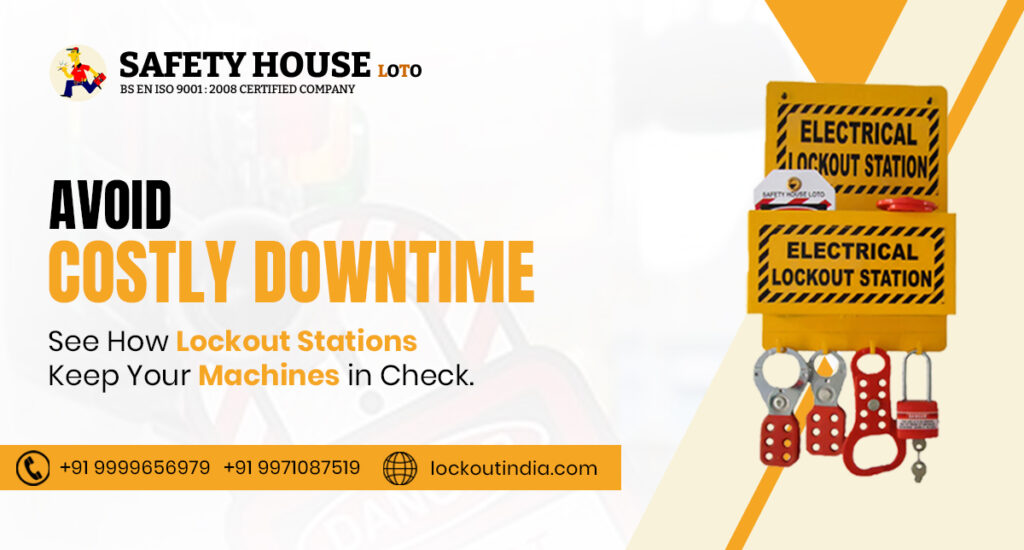
Avoid Costly Downtime – See How Lockout Stations Keep Your Machines in Check
Unplanned machine downtime is one of the biggest challenges faced by industrial facilities today. Beyond lost productivity, it often brings safety risks, repair expenses, and compliance issues. Many of these problems arise during maintenance or repair work when machines are not properly isolated from energy sources. This is where Lockout Stations play a critical role.
In this detailed guide, we’ll explore how Lockout Station help prevent costly downtime, improve workplace safety, and create a structured approach to energy control. Written in the context of Safety House Loto, this blog aims to give end users practical, real-world insights rather than generic advice.
Understanding the Real Cost of Downtime
Downtime is not just about machines standing still. It has a ripple effect across the entire operation.
- Production delays lead to missed deadlines
- Unexpected repairs increase maintenance budgets
- Worker injuries result in compensation claims and legal risk
- Non-compliance with safety regulations can attract penalties
Many of these issues stem from improper lockout–tagout practices. When maintenance teams cannot quickly access the right lockout devices, shortcuts happen—and shortcuts are costly.
What Are Lockout Stations?
Lockout Stations are centralized storage units designed to hold all essential lockout–tagout devices in one clearly visible, accessible location. They act as the command center for any lockout activity on the shop floor.
A well-organized station typically includes:
- Lockout Padlocks in multiple colors
- Hasps, tags, and circuit breaker lockouts
- Valve lockouts and cable devices
- A complete LOTO KIT for different applications
By keeping everything in one place, Lockout Stations eliminate confusion, save time, and ensure that safety procedures are followed consistently.
Why Lockout Stations Are Critical for Machine Safety
1. Faster Response During Maintenance
When a machine needs servicing, time matters. Searching for individual lockout devices wastes valuable minutes. With Lockout Stations, technicians immediately know where to find the correct LOTO KIT, reducing maintenance time without compromising safety.
2. Eliminating Human Error
Improper lockout is often caused by missing or mismatched devices. Centralized Lockout Stations reduce this risk by standardizing the lockout process and ensuring that approved Lockout Padlocks and accessories are always available.
3. Supporting Compliance and Audits
Safety audits demand proof of effective lockout–tagout systems. Clearly labeled Lockout Stations demonstrate a company’s commitment to safety and make compliance checks smoother.
How Lockout Stations Help Prevent Costly Downtime
Clear Visibility = Better Discipline
When Lockout Stations are installed near machines or maintenance zones, they act as constant visual reminders of safety protocols. Workers are less likely to bypass procedures when the tools are clearly in front of them.
Standardized Procedures Across Teams
Different shifts and departments often follow slightly different practices. Lockout Stations help standardize lockout routines, ensuring that everyone uses the same Lockout Padlocks, tags, and devices—every time.
Reduced Equipment Damage
Machines that are accidentally energized during maintenance can suffer severe damage. Using the correct LOTO KIT from a well-equipped Lockout Station protects not just workers, but the machines themselves.
Key Components of an Effective Lockout Station
Lockout Padlocks
These are the backbone of any lockout system. Unlike regular padlocks, Lockout Padlocks are designed for safety use:
- Non-conductive and corrosion-resistant
- Available in multiple colors for identification
- Unique keying options for accountability
LOTO KIT
A complete LOTO KIT includes devices for electrical, mechanical, hydraulic, and pneumatic energy sources. Having a full kit inside the Lockout Station ensures that no energy source is overlooked.
Tags and Hasps
Tags communicate critical information such as who locked the equipment and why. Hasps allow multiple workers to lock out the same machine safely during group maintenance.
Choosing the Right Lockout Station for Your Facility
Not all facilities have the same needs. Selecting the right Lockout Station depends on several factors:
- Size of the operation – Larger plants may need multiple stations
- Type of machinery – Determines the kind of lockout devices required
- Number of workers – Impacts the quantity of Lockout Padlocks needed
At Safety House Loto, Lockout Station are designed to be modular and scalable, making them suitable for small workshops as well as large industrial plants.
Best Practices for Using Lockout Stations Effectively
Train Your Team
Even the best Lockout Stations are ineffective without proper training. Workers must understand:
- When to use lockout–tagout
- How to select the correct LOTO KIT
- Why Lockout Padlocks should never be shared
Assign Responsibility
Designate safety officers or supervisors to inspect Lockout Stations regularly. Missing or damaged devices should be replaced immediately.
Place Stations Strategically
Lockout Stations should be installed near high-risk machines or maintenance zones—not hidden away in storage rooms.
Why Safety House Loto Is a Trusted Name
Safety House Loto specializes in providing high-quality Lockout Stations and lockout–tagout solutions designed for real industrial challenges. What sets us apart is our focus on usability, durability, and compliance.
- Robust Lockout Station built for industrial environments
- Premium Lockout Padlocks with reliable key systems
- Comprehensive LOTO KIT options for diverse applications
- Expert guidance to help you build a strong safety culture
By choosing Safety House Loto, organizations invest not just in products, but in long-term operational safety.
Lockout Stations: A Smart Investment, Not an Expense
Many companies view safety equipment as a cost. In reality, Lockout Stations are an investment that pays for itself by:
- Reducing unplanned downtime
- Preventing accidents and injuries
- Extending machine life
- Improving workforce confidence
When machines are properly locked out using standardized systems, maintenance becomes predictable and controlled—exactly what modern industries need.
Conclusion
Avoiding costly downtime starts with taking control of machine safety. Lockout Stations provide structure, visibility, and consistency to lockout–tagout practices, ensuring that machines remain secure during maintenance and repair.
With the right combination of Lockout Stations, Lockout Padlocks, and a complete LOTO KIT, industries can significantly reduce risks while improving efficiency. Safety House Loto remains committed to helping businesses protect their people, their machines, and their productivity—because safety done right is downtime avoided.
