
Beyond the Hasp: Why Your Group Lockout Box is More Than Just a Container
When it comes to industrial safety, few tools are as overlooked yet as critical as the Group Lockout Box. For many workplaces, this piece of equipment might appear to be nothing more than a metal container. But in reality, it plays a powerful role in ensuring compliance, streamlining safety protocols, and protecting lives. At Safety House Loto, we believe that a Lockout Box is not just about securing keys—it’s about reinforcing a culture of accountability and teamwork.
What is a Group Lockout Box?
A Group Lockout Box is a central control system designed to store keys from lockout points during maintenance or servicing. Instead of each worker individually locking every energy source, the authorized keys are placed inside the box. Workers then apply their personal locks to the box itself, ensuring no one can access the keys until every lock is removed.
This method provides:
- Efficiency: One-time isolation of energy points.
- Accountability: Every worker is responsible for locking the box.
- Safety: No equipment can be re-energized until the last worker’s lock is removed.
“Think of your Group Lockout Box not just as a container, but as a vault of trust—every lock on it is a worker’s voice saying, ‘I am safe to work.’”
Why Your Group Lockout Box is More Than a Storage Tool
1. Reinforcing Safety Culture
The very act of locking a Lockout Box brings workers together under a shared responsibility. It builds trust and ensures that everyone involved in maintenance or repair is equally protected. This unity reduces the risk of oversight and promotes safety as a team effort.
2. Simplifying Complex Lockouts
In facilities with multiple machines, locking each energy point can be time-consuming. The Group Lockout Boxes streamlines the process: once all keys are secured inside, workers only need to add their locks to the box, saving time without compromising safety.
3. Ensuring Compliance with Standards
OSHA and other global safety standards require stringent lockout/tagout procedures. Using a Lockout Box helps companies comply by providing clear, documented control over hazardous energy. A proper system reduces liability and demonstrates due diligence during audits.
Group Lockout Box vs. Traditional Methods
Traditional lockout methods often require every worker to apply locks on every energy point. In contrast, the Best Group Lockout Box consolidates this process into one centralized location.
Advantages of using a Group Lockout Box:
- Reduces clutter at the machine.
- Increases clarity on who is working.
- Saves time in large-scale shutdowns.
- Provides a tamper-proof method to store isolation keys.
Integration with Other Lockout Devices
A Group Lockout Box is not a standalone solution; it works in harmony with other lockout devices such as valve lockouts, electrical lockouts, and hasps. The synergy ensures that every energy source is controlled before work begins. While the box keeps the keys safe, lockout devices keep the energy sources securely isolated.
This integration guarantees that even in high-risk environments, workers remain protected from unexpected startups or energy releases.
Features That Make a Group Lockout Box Indispensable
- Durability – Heavy-duty construction to withstand industrial environments.
- Visibility – Transparent windows or bold labeling for easy identification.
- Capacity – Ability to hold multiple keys for large-scale operations.
- Flexibility – Portable and wall-mounted options to fit different workplace needs.
Why Industries in India Rely on Group Lockout Box Solutions
From power plants to manufacturing units, industries are realizing that investing in a Lockout Box is an investment in people. With increasing awareness about workplace safety, companies across India are turning to trusted suppliers like Safety House Loto to provide high-quality, customizable lockout solutions.
The right Lockout Box doesn’t just safeguard equipment—it saves lives, prevents downtime, and creates an environment where workers can focus on tasks without fear.
The Real Value Lies in Accountability
What makes the Lockout Box powerful is not just its steel body or design but the principle it upholds. Every lock attached by a worker represents their physical presence and their right to return home safe. Without all locks removed, no machine can be restarted—making it an unbreakable chain of accountability.
Final Thoughts
A Group Lockout Box is not just a container; it’s the heart of a well-executed lockout/tagout system. It ensures safety, simplifies processes, and reinforces the trust between employers and employees. Paired with reliable lockout devices, it becomes a comprehensive safeguard against industrial hazards.
At Safety House Loto, we understand that workplace safety is non-negotiable. That’s why we provide high-quality, durable, and compliant Lockout Boxes solution tailored to industrial needs. Because beyond the hasp, what truly matters is the safety of every worker.
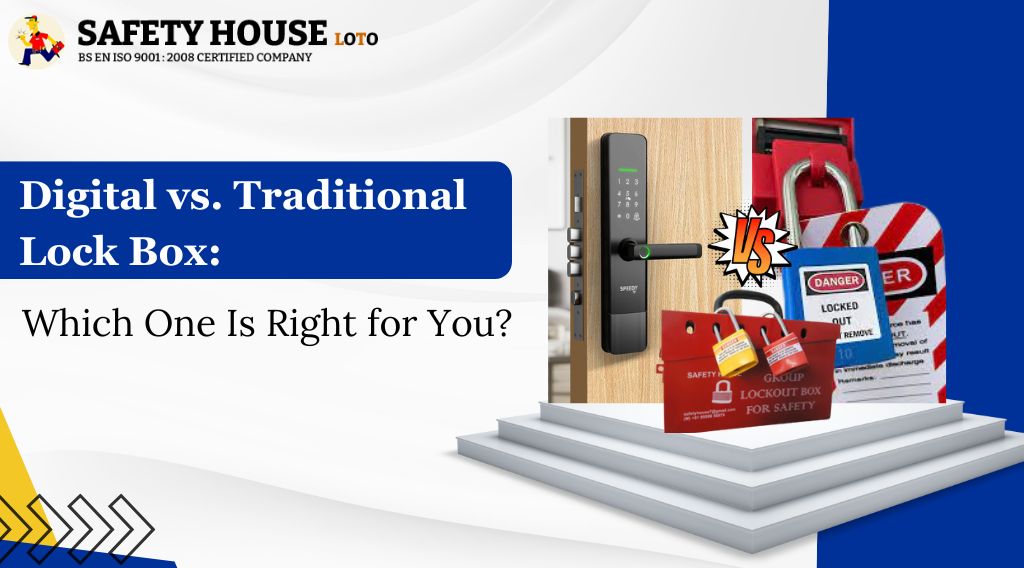
Digital vs. Traditional Lock Boxes: Which One Is Right for You?
In industrial safety protocols, particularly within Lockout/Tagout (LOTO) procedures, selecting the appropriate lock box is crucial for ensuring the safety of personnel and equipment. Lock boxes, including Group Lockout Boxes and key boxes, are essential tools that facilitate the secure management of keys during maintenance and servicing activities. With advancements in technology, digital lock boxes have emerged as alternatives to traditional mechanical ones. This article explores the differences between digital and traditional lock box to help you determine which is best suited for your needs.
Understanding Lock Boxes in LOTO
A lock box is a secure container used to store keys that control access to energy-isolating devices. In a Group Lockout scenario, a Group Lockout Box allows multiple workers to apply their personal locks, ensuring that equipment cannot be re-energized until all locks are removed. This system enhances safety by requiring each authorized employee to verify that the equipment remains de-energized during maintenance.
Traditional Lock Boxes
Advantages:
- Simplicity and Reliability: Traditional lock boxes are mechanical devices with no electronic components, making them straightforward to use and less prone to technical failures.
- Cost-Effective: Generally, they have a lower upfront cost compared to digital alternatives.
- No Power Dependency: They do not require batteries or electrical power, ensuring functionality even during power outages
Disadvantages:
- Limited Access Control: Managing access requires physical keys, which can be lost, duplicated, or stolen, posing security risks.
- No Audit Trail: Traditional lock box do not provide records of access, making it difficult to track who accessed the keys and when.
- Manual Key Management: Assigning and retrieving keys is a manual process, which can be time-consuming and error-prone.
Digital Lock Boxes
Advantages:
- Enhanced Security Features: Digital lock box often include features such as PIN codes, biometric access, and RFID card readers, reducing the risk of unauthorized access.
- Audit Trails: They can record access logs, providing a history of who accessed the box and when, which is valuable for compliance and accountability.
- Remote Access and Management: Some models allow administrators to manage access permissions remotely, facilitating quicker response times and flexibility.
- Customizable Access Levels: Access can be tailored for different users, with options for temporary or scheduled access, enhancing operational efficiency.
Disadvantages:
- Higher Initial Investment: Digital lock box typically have a higher purchase price and may incur additional costs for software or network integration.
- Power and Connectivity Requirements: They rely on batteries or electrical power and may require network connectivity, which can be a limitation in certain environments.
- Technical Complexity: Installation and maintenance may require technical expertise, and there is a potential risk of electronic malfunctions.
Choosing the Right Lock Box for Your Needs
When deciding between a digital and traditional lock box, consider the following factors:
- Operational Environment: In environments where power supply and network connectivity are reliable, digital lock box can offer enhanced features. In contrast, traditional lock boxes are suitable for locations where simplicity and independence from power sources are priorities.
- Security Requirements: If detailed access records and customizable permissions are essential, digital lock boxes provide superior capabilities. For basic security needs, traditional lock boxes may suffice.
- Budget Constraints: Evaluate the total cost of ownership, including initial investment and ongoing maintenance. While digital lock boxes have higher upfront costs, they may offer long-term savings through improved efficiency and security.
- Compliance and Accountability: Industries with strict regulatory requirements may benefit from the audit trails and access controls provided by digital lock boxes.
Conclusion
Both digital and traditional lock boxes play vital roles in ensuring safety during maintenance and servicing operations. Traditional lock boxes offer simplicity and reliability, making them suitable for straightforward applications. Digital lock boxes provide advanced features that enhance security, accountability, and operational efficiency. Assessing your specific needs, operational environment, and regulatory requirements will guide you in selecting the most appropriate lock box solution for your organization.
At Safety House Loto, we offer a comprehensive range of lockout solutions. Our products are crafted to ensure maximum safety and compliance, providing you with the tools necessary to maintain a secure working environment.
