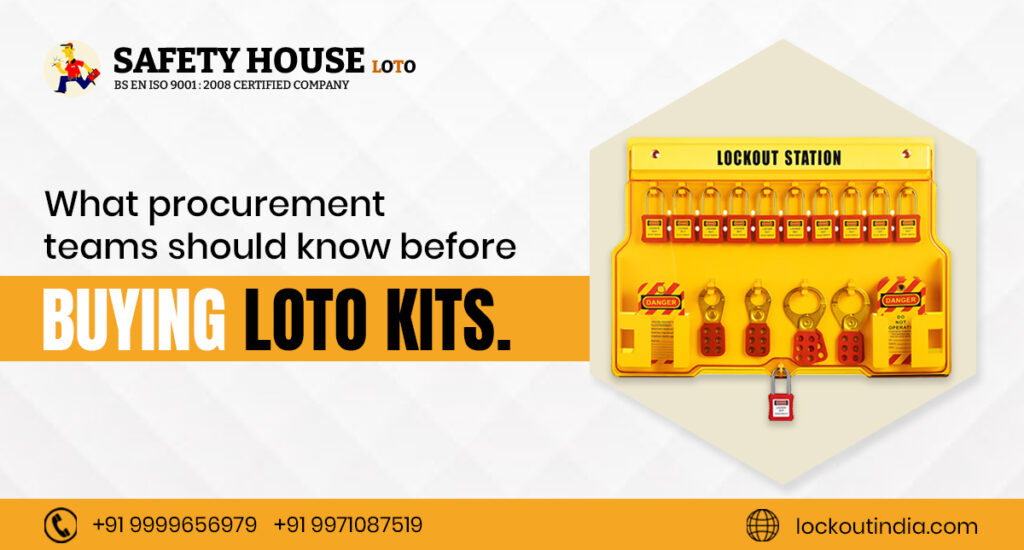
What Procurement Teams Should Know Before Buying LOTO Kits
In industrial environments, safety purchases are never just about price—they’re about reliability, compliance, and real-world usability. For procurement teams, purchasing LOTO Kits (Lockout Tagout Kits) is a critical responsibility, as these kits directly impact worker safety, regulatory compliance, and operational continuity.
Before finalizing a purchase, procurement professionals must understand what truly defines an effective lock out tag out kit, beyond just product catalogs and quotations. At Safety House Loto, we help organizations make informed decisions by aligning safety solutions with operational needs.
Understanding the Purpose of LOTO Kits
LOTO Kits are designed to prevent the accidental startup of machinery during maintenance, repair, or inspection activities. They isolate hazardous energy sources using physical locking devices and clear identification tags.
A standard lockout tagout kit typically includes multiple locking devices, tags, and accessories that ensure machinery remains safely de-energized. For procurement teams, the goal is to select kits that are versatile, durable, and compliant with safety standards—while fitting the facility’s specific applications.
Identifying the Right Type of LOTO Kit for Your Facility
Not all facilities require the same kind of LOTO solution. Understanding operational risks is the first step toward selecting the right loto kit set.
Electrical vs Mechanical Applications
Facilities with high electrical exposure should prioritize a loto kit electrical, which includes insulated devices designed for circuit breakers, switchgear, and electrical panels. Mechanical-heavy environments may need valve lockouts, cable lockouts, or plug lock devices.
Department-Wise Usage
Some organizations require centralized kits, while others need department-specific or portable kits. In such cases, choosing a well-organized loto kit box ensures quick access and accountability during maintenance work.
Key Components Procurement Teams Should Evaluate
A reliable loto lock is the backbone of any lockout system. Procurement teams should carefully evaluate the following components before approving a purchase:
- Padlocks: Must be durable, uniquely keyed, and corrosion-resistant
- Tags: Clearly visible, weather-resistant, and compliant with safety labeling norms
- Locking Devices: Suitable for breakers, valves, plugs, and switches
- Storage Box: Sturdy, portable, and clearly labeled
An effective loto kit set balances completeness with ease of use, ensuring safety procedures don’t become time-consuming or confusing.
Compliance, Standards, and Documentation
Procurement decisions must align with local and international safety regulations. A certified lockout tagout kit supports compliance with OSHA, ISO, or equivalent safety standards.
Beyond the physical kit, procurement teams should verify:
- Product certification and test reports
- Clear user instructions and labeling
- Compatibility with internal safety procedures
At Safety House Loto, our kits are designed to meet industry standards while remaining practical for everyday use.
Durability and Long-Term Value
Safety equipment is an investment, not a one-time expense. While loto kit price is often a deciding factor, focusing only on upfront cost can be misleading.
Low-quality locks and tags may wear out quickly, leading to frequent replacements and higher long-term costs. High-quality LOTO Kits reduce replacement frequency, minimize downtime, and enhance workforce confidence.
Procurement teams should assess:
- Material quality
- Resistance to chemicals, heat, and moisture
- Ease of maintenance and replacement
Customization and Scalability
As facilities grow, safety systems must scale with them. Modular loto kit box options allow organizations to expand lockout coverage without replacing entire systems.
Customized kits—tailored to specific equipment or departments—improve usability and adoption. Procurement teams should consider suppliers who offer flexibility rather than fixed, generic kits.
Evaluating LOTO Kit Pricing Strategically
Understanding loto kit price requires looking beyond the quote. Procurement teams should compare:
- Number of devices included
- Type and quality of locks
- Suitability for electrical or mechanical systems
- After-sales support and replacement availability
A competitively priced loto kit electrical that lacks essential devices may end up costing more in operational inefficiencies.
Supplier Reliability and Support
Choosing the right supplier is as important as choosing the right kit. A trusted supplier ensures consistent quality, documentation support, and availability of spare components.
Safety House Loto focuses on long-term partnerships, offering expert guidance to help procurement teams select the most effective lockout tagout kit for their specific applications.
Conclusion
For procurement teams, buying LOTO Kits is a safety-critical decision that goes far beyond cost comparison. The right lock out tag out kit improves compliance, protects workers, and supports uninterrupted operations.
By evaluating application needs, component quality, scalability, and supplier reliability, procurement professionals can ensure their investment delivers real safety value. With expertly designed solutions and industry insight, Safety House Loto remains a trusted partner in workplace safety.
FAQs
1. What is included in a standard LOTO kit?
A typical kit includes padlocks, tags, breaker lockouts, valve lockouts, cable devices, and a storage box. The exact contents vary by application.
2. How do I choose between a general LOTO kit and a loto kit electrical?
If your facility handles frequent electrical maintenance, a loto kit electrical is recommended due to its insulated and circuit-specific components.
3. Is loto kit price the most important factor?
No. While price matters, durability, compliance, and suitability for your equipment are more important for long-term safety and cost control.
4. Can LOTO kits be customized?
Yes. Many suppliers, including Safety House Loto, offer customized loto kit sets based on equipment type and department needs.
5. How often should LOTO kits be replaced?
Replacement depends on usage and environment. High-quality kits last longer, but periodic inspection is essential to ensure continued safety.
