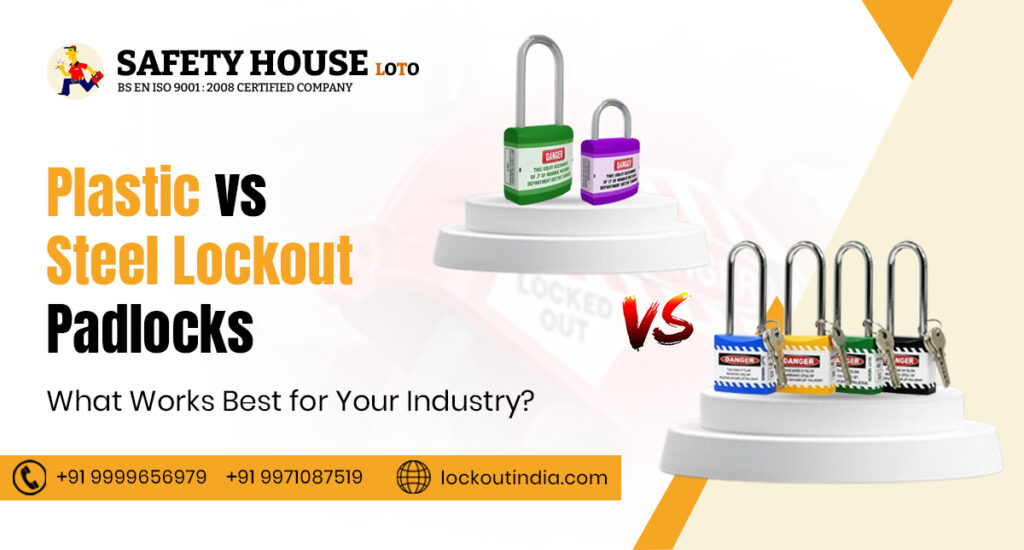
Plastic vs. Steel Lockout Padlocks: What Works Best for Your Industry?
In industrial environments where safety is non-negotiable, lockout/tagout (LOTO) procedures play a vital role in protecting workers from unexpected equipment startup or energy release. At the heart of every effective LOTO program are lockout padlocks—small yet critical devices that physically prevent machinery from being re-energized during maintenance or repair.
However, not all lockout padlocks are the same. One of the most common questions safety managers and plant engineers face is:
Should we use plastic or steel lockout padlocks?
Each option has its own strengths, limitations, and ideal use cases. This article explores the differences between plastic and steel safety lockout padlocks, helping you choose the right solution based on your industry, environment, and safety requirements.
Understanding Lockout Padlocks in LOTO Systems
Lockout padlocks are specifically designed for safety applications—not general security. Unlike standard padlocks, they are:
- Used exclusively for lockout/tagout procedures
- Assigned to individual workers
- Marked clearly with warnings such as “Do Not Operate”
- Built to withstand industrial conditions
Their primary function is to ensure that only the authorized person who applied the lock can remove it, eliminating the risk of accidental startup.
What Are Plastic Lockout Padlocks?
Plastic lockout padlocks are typically made from non-conductive thermoplastic or nylon bodies, combined with insulated shackle options. They are lightweight, corrosion-resistant, and highly visible.
Key Features of Plastic Lockout Padlocks
- Non-conductive construction
- Lightweight and easy to carry
- Resistant to chemicals and moisture
- Available in multiple bright colors
- Ideal for electrical safety applications
These padlocks are commonly used where electrical hazards are present and where visual identification is important.
What Are Steel Lockout Padlocks?
Steel lockout padlocks feature metal bodies and hardened steel shackles, offering enhanced physical strength and durability. They are designed for tough industrial environments where mechanical abuse or extreme conditions are common.
Key Features of Steel Lockout Padlocks
- High resistance to impact and tampering
- Excellent durability in harsh environments
- Suitable for outdoor and heavy-duty use
- Strong shackle strength for mechanical lockout points
Steel safety lockout padlocks are preferred where maximum physical security is required.
Plastic vs. Steel Lockout Padlocks: A Detailed Comparison
1. Electrical Safety and Conductivity
Plastic lockout padlocks are non-conductive, making them the safer option for electrical panels, switchgear, and circuit breakers. They significantly reduce the risk of electrical shock.
Steel lockout padlocks, on the other hand, conduct electricity and should be used cautiously in electrical environments. They are better suited for mechanical energy isolation.
Best choice for electrical applications: Plastic padlocks
2. Durability and Strength
Steel lockout padlocks offer superior mechanical strength. They can withstand heavy impacts, rough handling, and outdoor exposure, making them ideal for industries like mining, steel plants, and construction.
Plastic padlocks are durable but may not handle extreme physical abuse as well as steel.
Best choice for heavy-duty environments: Steel padlocks
3. Environmental Resistance
Plastic safety lockout padlocks perform exceptionally well in wet, humid, or chemical-prone environments. They resist corrosion, rust, and chemical degradation.
Steel padlocks, unless specially coated, may be vulnerable to rust in corrosive or coastal environments.
Best choice for corrosive or wet conditions: Plastic padlocks
4. Weight and Worker Convenience
Plastic padlocks are lightweight, which is important when workers need to carry multiple locks during group lockout procedures. Reduced weight improves comfort and compliance.
Steel lockout padlocks are heavier and may cause fatigue when used extensively.
Best choice for frequent use and portability: Plastic padlocks
5. Visual Identification and Compliance
Most plastic lockout padlocks are available in bright colors such as red, yellow, blue, and green. Color-coding helps distinguish departments, energy sources, or personnel, improving compliance with LOTO procedures.
Steel padlocks typically offer fewer color options and rely more on tags for identification.
Best choice for color-coded lockout systems: Plastic padlocks
Industry-Based Recommendations
Manufacturing & Electrical Maintenance
Industries dealing with electrical panels, control cabinets, and energized equipment benefit most from plastic lockout padlocks due to their non-conductive properties and visibility.
Chemical & Pharmaceutical Plants
With frequent exposure to moisture, chemicals, and washdowns, plastic safety lockout padlocks offer better longevity and corrosion resistance.
Heavy Engineering & Metal Processing
Steel lockout padlocks are better suited for environments with mechanical stress, vibration, and outdoor exposure, such as forging units, cement plants, and mining operations.
Oil & Gas and Power Plants
A combination of both plastic and steel lockout padlocks is often ideal—plastic for electrical isolation and steel for mechanical energy sources like valves and pipelines.
Choosing the Right Lockout Padlocks for Your Facility
When selecting between plastic and steel lockout padlocks, consider the following factors:
- Type of energy source (electrical, mechanical, hydraulic, pneumatic)
- Environmental conditions (moisture, chemicals, outdoor use)
- Frequency of lockout procedures
- Requirement for color coding and identification
- Compliance with OSHA or local safety standards
In many facilities, a mixed approach delivers the best results—using different padlock types based on application rather than relying on a single solution.
Final Thoughts
Both plastic and steel lockout padlocks play an essential role in building a robust and compliant lockout/tagout program. The “best” option depends not on preference, but on application, environment, and risk level.
By understanding the strengths and limitations of each type, safety professionals can make informed decisions that enhance worker protection, improve compliance, and reduce downtime.
At Safety House Loto, we believe that selecting the right safety lockout padlocks is a crucial step toward creating safer industrial workplaces—where procedures are followed, risks are minimized, and people return home safely every day.
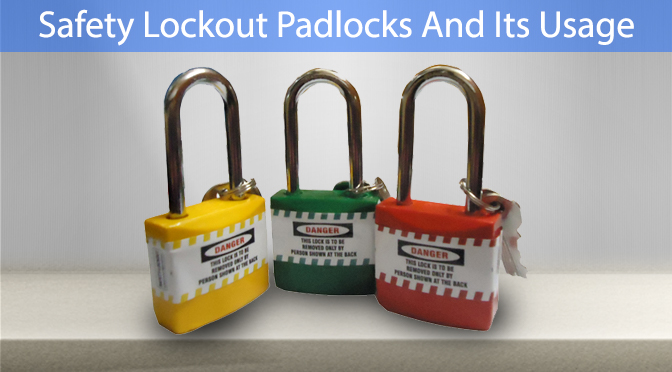
Safety Lockout Padlocks And Its Usage
Padlocks are little and transportable locks that are used for many thousand years to defend against the thieving, unauthorized entrance. within the terribly broadest sense of the word, a lock may be a device that keeps things valuables safe or restricts access to one thing that desires protection. These safety lockout padlocks are fitted to things like doors and cabinets and have 2 physically separate elements, One half is fitted to the frame and also the different part of the lock fits into an oblong hole within the door.
A Lockout padlock consists of a body, shackle, and protection mechanism. the everyday shackle may be a “U” formed loop of metal (round or sq. in cross-section) that encompasses what’s being secured by the padlock e.g. Chain. Generally, most padlock shackles either swing away or slide out of the padlock body once within the unfastened position. There are 2 basic styles of padlock protection mechanisms, integrated & standard. Integrated protection mechanisms directly have to interact with the padlock’s shackle with the tumblers whereas standard protection mechanisms don’t directly use the tumblers to lock the shackle. Padlocks with standard mechanisms are typically automatic, or automatic.
Here Are Some Usage Of Safety Lockout Padlocks-
- Keeping vehicles secure– we all love our vehicles and treat them like our family members, and nobody wants to get their tools or any part to be stolen by a thief. Companies like Safety house, one of the best lockout padlock manufacturers have just the solution that you need. We have a vast range of strong safety padlocks. It is one of the very traditional ways to keep your vehicles safe. The top-notch quality of the lock ensures the safety of the vehicle.
- Locking lockers at offices and fitness centres – people keep their important things in lockers like their purses, mobiles or other things, and places like office and gym where many people come and go makes it a less secure place. While being working we all want to be ensure that our personal belongings are safe and for that peace of mind a safety lockout padlock can help a lot.
- Protecting information for companies – in this modern world people are depend on computers be it business, financing, socialising or even dating, everything is being typed into the computer. All these high tech systems need to be protected by a more traditional safety measure, a good quality lockout padlocks will keep the intruders away from entering the premises in the first place.
Given all these usages of safety lockout padlocks, you must have known the importance of these padlocks due to their fantastic facilities. Safety House is an ISO certified company, one of the best manufacturers of lockout products in India. Our aim is customers satisfaction in all aspects.
Checkout Our Other Lockout Tagout Products:
- Scaffold Tag
- Osha lock
- Valve lockout
- Key box
Enquire Now
