
LOTO Lock for Electrical Safety: Best Practices for Maintenance Teams
Electrical maintenance work presents some of the most serious hazards in industrial environments. Every year, workers suffer severe injuries or fatalities from unexpected electrical energy release during maintenance procedures. Implementing proper loto lock protocols with the right equipment forms the foundation of electrical safety, protecting maintenance teams from potentially deadly accidents.
Understanding the Critical Role of LOTO Locks
A quality loto lock serves as the primary barrier between maintenance personnel and dangerous electrical energy. Unlike standard padlocks, these specialized devices are engineered specifically for lockout applications, featuring unique keying systems, durable construction, and clear identification capabilities. The lock physically prevents circuit breakers from being energized while maintenance work occurs, creating an impenetrable safety barrier.
The consequences of inadequate lockout procedures are severe. According to safety statistics, electrical accidents account for a significant percentage of workplace fatalities, with many incidents occurring during maintenance activities. Proper lockout procedures, supported by reliable equipment, can eliminate these preventable tragedies.
Essential Features of Effective Lockout Padlocks
Durability and Material Construction
Industrial environments demand robust equipment that withstands harsh conditions. High-quality lockout padlocks feature corrosion-resistant materials, typically including hardened steel shackles and polymer bodies that resist chemicals, temperature extremes, and physical abuse. The lock mechanism itself must operate reliably even after extended exposure to dust, moisture, and vibration.
Unique Keying Systems
Every maintenance worker requires their own uniquely keyed lock to ensure individual accountability. This prevents unauthorized removal and guarantees that only the person who applied the loto lock can remove it. Some organizations implement master keying systems for supervisory override capabilities, though this requires careful management to maintain security integrity.
Clear Identification Methods
Visual identification capabilities allow quick recognition of who applied each lock and when. Color-coding systems, engraved employee names, or photo identification tags help supervisors track lockout status at a glance. This visibility becomes crucial during shift changes or emergency situations where rapid assessment is necessary.
Selecting the Right Lockout Supplier
Quality Assurance Standards
When it comes to safety, there’s no room for compromise. Safety House Loto ensures that every product meets stringent international safety and quality standards. Our lockout/tagout devices are certified by globally recognized testing organizations and are manufactured under rigorous quality control processes. We provide complete documentation—including product specifications, test reports, and compliance certificates—so you can be confident in the integrity of every device.
Product Range and Customization
We understand that no two electrical systems are alike. That’s why we offer an extensive range of lockout solutions, including varied lock sizes, shackle lengths, and devices for specialized applications. Need tailored solutions? We also provide customization services like engraving, color coding, and unique keying options, designed to meet your specific operational requirements.
Technical Support and Training
We’re more than just a supplier—we’re your safety partner. Our team of experts brings in-depth knowledge of lockout/tagout applications and is ready to assist with selecting the right equipment for your systems. From procedural development to addressing complex lockout scenarios, Safety House Loto offers comprehensive technical support and hands-on training to ensure your workplace remains safe and compliant.
Implementation Best Practices for Maintenance Teams
1. Comprehensive Procedure Development
Effective loto lock procedures begin with thorough energy source identification. Maintenance teams must map all electrical circuits, identify isolation points, and document step-by-step loto lock sequences. These procedures should account for stored energy, backup power systems, and interconnected circuits that might not be immediately obvious.
2. Regular Training and Competency Verification
Initial training alone is insufficient for maintaining safety standards. Regular refresher sessions, hands-on practice, and competency testing ensure that maintenance personnel retain critical skills and stay current with procedure updates. Training should cover both standard loto lock procedures and emergency response protocols.
3. Equipment Inspection and Maintenance
Even the most reliable loto lock equipment requires periodic inspection and maintenance. Establish schedules for checking lock functionality, key operation, and identification markings. Replace worn or damaged equipment immediately, as compromised locks can create false security and dangerous situations.
4. Documentation and Accountability
Maintaining detailed records of lockout activities creates accountability and helps identify improvement opportunities. Documentation should include energy source verification, lock application times, work performed, and removal authorization. This information proves valuable for procedure refinement and regulatory compliance.
Common Challenges and Solutions
Weather exposure can affect lock performance, particularly in outdoor installations. Selecting locks with appropriate environmental ratings and implementing protective measures helps maintain reliable operation. Similarly, dealing with multiple energy sources requires careful coordination and sometimes specialized lockout devices designed for complex systems.
Conclusion
Electrical maintenance safety depends on combining proper procedures with reliable equipment from trusted suppliers. Quality lockout padlocks form the cornerstone of effective energy control, protecting maintenance teams from serious injuries and fatalities. Safety House Loto remains committed to providing maintenance professionals with the tools and knowledge necessary to work safely around electrical hazards. Remember that every properly applied loto lock represents a life protected and a family kept whole.
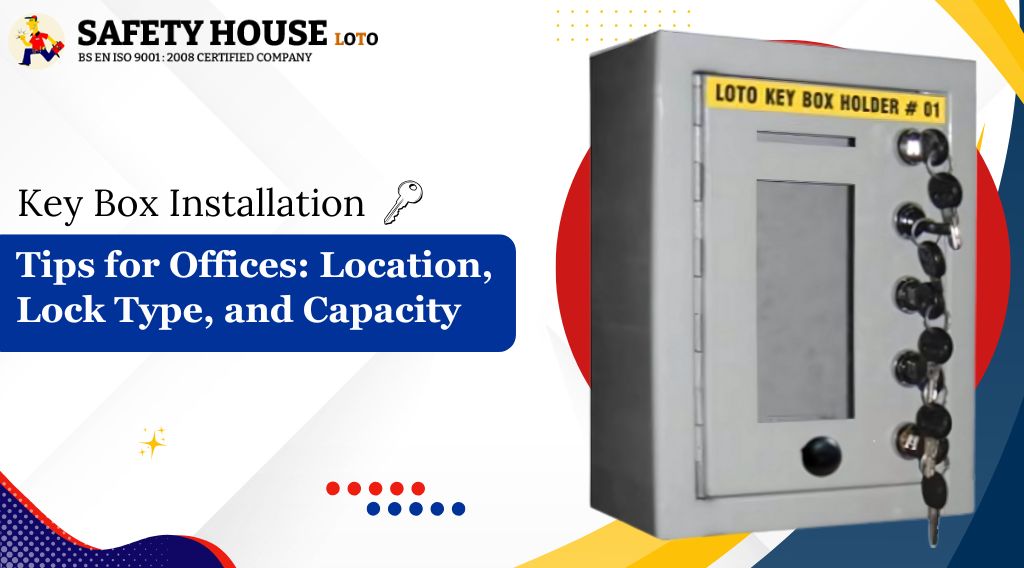
Key Box Installation Tips for Offices: Location, Lock Type, and Capacity
Posted On: June 9, 2025
Categorized In: Key Box
Written By: blog
Managing keys and locks in an office environment can be more complex than it seems. With growing concerns around safety, compliance, and access control, having a reliable key box for office use is no longer optional—it’s essential. For companies using LOTO locks (Lockout Tagout), it becomes even more critical to ensure keys are securely stored, easily accessible to authorized personnel, and organized systematically.
In this blog, we’ll explore important tips on key box installation for offices, focusing on three core aspects: location, lock type, and capacity. These factors, when considered carefully, help ensure safety, compliance, and operational efficiency. For organizations like Safety House Loto, which cater to industrial safety solutions, these practices are especially valuable for customers seeking the right key management system.
Why Key Boxes Are Essential in Office Environments
In today’s modern workplace, access control isn’t limited to just IT systems—it applies to physical spaces, equipment, and machinery as well. Whether it’s for facility access, equipment rooms, maintenance lockers, or LOTO lock keys, a well-installed key box can streamline operations while ensuring security.
Without a proper system in place, keys can be misplaced, misused, or fall into unauthorized hands, leading to serious security breaches or compliance violations.
Choosing the Right Location for Key Box Installation
1. Accessibility vs. Security Balance
When selecting a location for a key box in an office, strike the right balance between accessibility and security. It should be easily reachable for authorized users without being exposed to general foot traffic or public areas.
Recommended locations:
- Near the main electrical control panels or maintenance areas (especially for LOTO lock systems)
- Inside facility manager’s cabin or reception control desk
- In a controlled access room, such as a security or operations room
2. Avoid External Wall Installations
Avoid installing key boxes on exterior-facing walls or near exit doors unless they are within a secure internal office premise. Exposed locations can increase the risk of tampering or theft.
Lock Type: Choose What Matches Your Security Needs
The locking mechanism of the key box is crucial, especially when handling LOTO locks or sensitive access keys.
1. Traditional Key Locks
These are cost-effective and simple to use but may not be ideal for high-security needs. They are best suited for smaller offices or less critical key storage.
2. Combination Locks
A step up in security, combination lock key boxes eliminate the need for managing additional keys. Ensure the combination is changed periodically and known only to authorized personnel.
3. Digital or Smart Lock Systems
Ideal for larger organizations or industrial environments. Digital key boxes can include PIN access, biometric scanners, or card readers. These are particularly useful for LOTO lock storage, where strict access control and audit trails are necessary.
Key Box Capacity: Plan for Present and Future Needs
One common mistake offices make is underestimating how many keys they’ll need to store—not just today, but in the future.
1. Evaluate Current Requirements
Start by counting all essential keys, including those for:
- Electrical and mechanical rooms
- LOTO lock systems
- Server and data centers
- Restricted access storage areas
2. Plan for Expansion
It’s wise to choose a key box with slightly higher capacity than your current need. Modular or expandable models offer flexibility as your office infrastructure grows.
Labeling and Key Organization
Even the best key box for office use can become inefficient without proper organization.
Best Practices:
- Use numbered hooks and corresponding labels
- Maintain a logbook or digital key tracking system
- Assign color codes for different departments or types of access
- Use tamper-evident tags for LOTO lock keys to ensure safety compliance
Integration with Lockout Tagout Procedures
If your office environment includes machinery or equipment that requires lockout-tagout, the key box should align with your LOTO procedure. This includes:
- Isolating LOTO lock keys from general-use keys
- Restricting access only to trained and authorized personnel
- Using group lockout boxes when multiple workers are involved
Integrating a key box into your LOTO protocol reduces confusion, prevents unauthorized operation of locked equipment, and ensures OSHA compliance.
Conclusion
Installing a key box in an office setting isn’t just about storing keys—it’s about promoting safety, organization, and accountability. By carefully considering the location, selecting the right locking mechanism, and planning for the appropriate capacity, businesses can ensure a secure and efficient key management system.
For safety-focused environments or those with LOTO lock requirements, these practices are even more essential. Organizations like Safety House Loto provide a range of safety solutions designed to support industries in maintaining safe and compliant workplaces. Whether you’re upgrading your safety protocol or planning a new facility layout, don’t overlook the importance of a well-planned key storage system.
