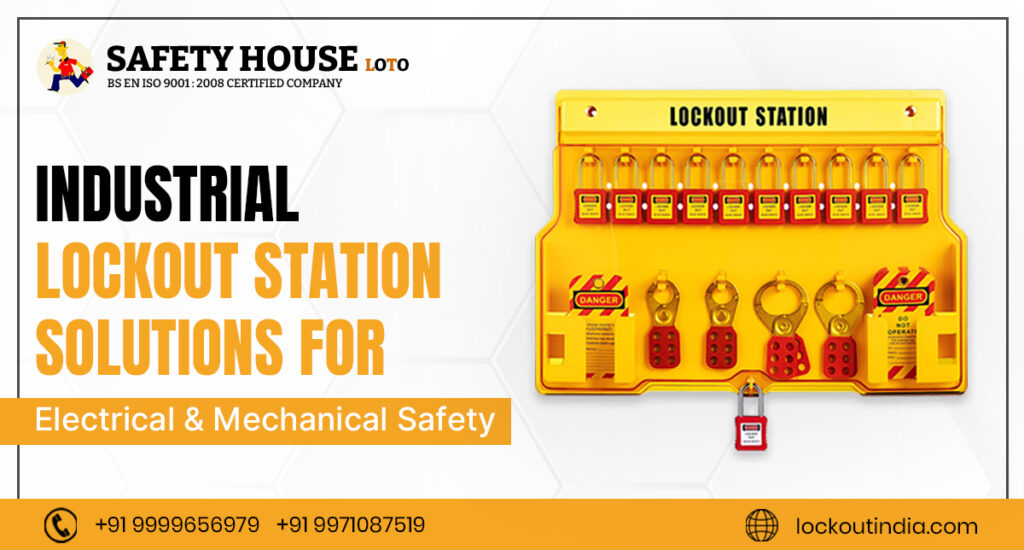
Industrial Lockout Station Solutions for Electrical & Mechanical Safety
Posted On: April 13, 2026
Categorized In: Lockout Station
Written By: Lockout India
Workplace safety in industrial environments is no longer optional—it is a critical operational requirement. Every year, thousands of industrial accidents occur due to improper handling of hazardous energy sources. According to global safety studies, a significant percentage of workplace injuries happen during maintenance when machines are not properly isolated.
This is where a Lockout Station plays a crucial role. It acts as a centralized system that ensures all lockout tagout (LOTO) devices are available, organized, and ready for use. Whether dealing with electrical panels or mechanical equipment, implementing an Industrial Lockout Station significantly reduces the risk of accidents.
Companies today rely on trusted brands like Safety House LOTO to implement reliable and compliant Lockout Station solutions that enhance workplace safety and efficiency.
What is a Lockout Station?
A Lockout Station is a dedicated storage unit that contains essential lockout tagout devices such as safety padlocks, hasps, tags, and lockout tools. These stations are strategically placed within industrial facilities to ensure easy access during maintenance or repair work.
An Industrial Lockout Station is specifically designed for high-risk environments such as factories, manufacturing units, and processing plants. It supports proper implementation of the Lockout Tagout system, ensuring that hazardous energy sources are completely isolated before any work begins.
Why Lockout Stations Are Essential for Industrial Safety
A well-maintained Safety Lockout Station is one of the most effective tools for preventing workplace accidents. It ensures that safety procedures are followed consistently and efficiently.
Key Benefits of Using a Lockout Station
- Prevents accidental machine startup
- Ensures compliance with OSHA safety standards
- Improves maintenance workflow
- Reduces downtime due to accidents
- Keeps lockout devices organized and accessible
Using a Lockout Station for factories ensures that workers have immediate access to safety equipment, reducing delays and improving overall operational safety.
Lockout Station for Electrical Safety
Electrical hazards are among the most dangerous risks in industrial environments. A Lockout Station for Electrical Safety ensures that all electrical energy sources are properly isolated before maintenance begins.
Features of Electrical Lockout Station Solutions
- Circuit breaker lockouts
- Electrical panel lockout devices
- Insulated safety padlocks
- Warning tags for hazard communication
An Industrial Lockout Station for electrical panels is essential for technicians working with high-voltage systems. It minimizes the risk of electric shock and ensures compliance with safety protocols.
Lockout Station for Mechanical Safety
Mechanical systems such as conveyors, presses, and rotating machines can cause serious injuries if not properly secured. A Lockout Station for Mechanical Safety helps isolate mechanical energy sources and prevent unexpected machine movement.
Common Applications
- Machine maintenance and repair
- Production line servicing
- Equipment installation
- Routine inspections
By using a Lockout Station for industrial use, organizations can protect workers from mechanical hazards and ensure safe maintenance practices.
Components of an Industrial Lockout Station
A high-quality Industrial Lockout Station includes a variety of lockout devices designed to handle different types of hazards.
Essential Components
- Safety padlocks
- Lockout hasps
- Tagout labels
- Valve lockout devices
- Electrical lockout tools
- Cable lockout systems
These components form a complete Lockout Tagout system, ensuring that all energy sources—electrical and mechanical—are effectively controlled.
How to Use a Lockout Station in Industry
Implementing a Lockout Station solution requires proper training and adherence to safety procedures.
Step-by-Step Process
- Identify all energy sources (electrical and mechanical)
- Shut down the equipment
- Isolate the energy source
- Apply lockout devices from the Lockout Station
- Attach safety tags
- Verify isolation before starting work
Following this process ensures that the Lockout Tagout system is implemented correctly, reducing the risk of accidents.
Real Industry Insight: Why Lockout Stations Matter
In many industrial cases, accidents occur not because safety tools are unavailable, but because they are not properly organized or accessible. A centralized Lockout Station eliminates this issue by ensuring that all safety devices are stored in one place.
Safety experts emphasize that using a Safety Lockout Station can reduce maintenance-related accidents significantly when combined with proper training and compliance.
Brands like Safety House LOTO focus on providing structured and easy-to-use Lockout Station solutions that align with real industrial challenges.
Choosing the Best Lockout Station for Industrial Use
Selecting the right Lockout Station is essential for effective safety implementation.
Factors to Consider
- Type of equipment (electrical or mechanical)
- Number of workers using the station
- Size and layout of the facility
- Compliance requirements
- Quality and durability of lockout devices
Organizations looking for reliable solutions often prefer Safety House LOTO for their high-quality Industrial Lockout Station systems designed for modern workplaces.
Common Mistakes to Avoid
Even with a Lockout Station, improper usage can lead to safety risks.
Avoid These Mistakes
- Ignoring lockout procedures
- Using shared padlocks
- Skipping verification steps
- Not updating safety tags
- Using low-quality lockout devices
A properly implemented Lockout Station solution ensures that these risks are minimized and safety standards are maintained.
Future of Lockout Tagout Safety
The future of industrial safety is evolving with technology. Modern Lockout Station solutions are becoming more advanced, focusing on efficiency and compliance.
Emerging Trends
- Smart lockout systems
- Digital tracking of lockout procedures
- Enhanced compliance monitoring
- Integration with safety management systems
Safety House LOTO continues to innovate by offering advanced Lockout Station systems that meet the evolving needs of industries.
FAQs
1. What is a Lockout Station used for?
A Lockout Station is used to store and organize lockout tagout devices, ensuring safe maintenance of electrical and mechanical systems.
2. What is the difference between electrical and mechanical lockout?
Electrical lockout isolates power sources, while mechanical lockout secures moving parts to prevent accidents.
3. How does a Lockout Station improve workplace safety?
A Safety Lockout Station ensures that all safety devices are accessible and used properly, reducing the risk of accidents.
4. What should be included in an Industrial Lockout Station?
It should include padlocks, hasps, tags, valve lockouts, and electrical lockout devices for complete safety coverage.
5. Why choose Safety House LOTO Lockout Stations?
Safety House LOTO offers durable and reliable Lockout Station solutions designed for industrial safety and compliance.
Final Thoughts
A well-designed Lockout Station is a critical component of industrial safety. From electrical hazard control to mechanical safety, it ensures that all energy sources are properly managed during maintenance work.
By investing in high-quality solutions like those offered by Safety House LOTO, industries can create a safer work environment, improve operational efficiency, and maintain compliance with safety standards.
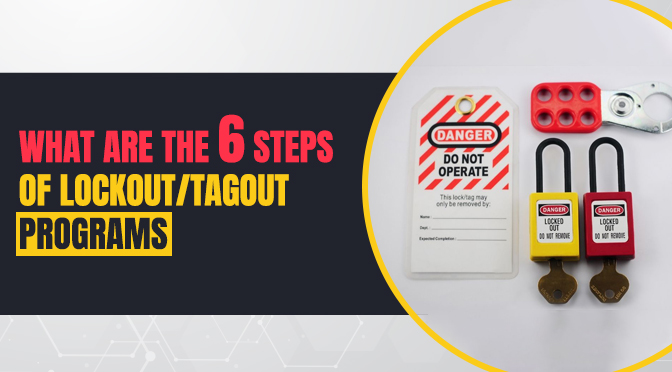
What Are The 6 Steps Of Lockout Tagout Programs?
If you want to ensure your work environment is safe for the workers and prevent possible safety accidents, then it is mandatory to implement lockout tagout programs. It is a mandatory program for any workplace to avoid the accidental release of hazardous energy that causes injuries and death.
Six Steps of the Lockout Tagout Program Procedure
Look below to get an in-depth understanding of the six steps of the lockout tagout program.
The purpose of the Lockout Tagout program is to increase the workplace’s safety. Working with machinery may be hazardous, but taking the necessary precautions can significantly reduce the danger.
Step 1: Preparation
Preparation is one of the major steps of the lockout tagout programs. This step is involved servicing and maintaining the lockout and Tagout machine. During this phase, an authorized employee conducts extensive research to understand the potential hazards associated with dangerous energy. It is vital to find and monitor the hazards.
Step 2 – Shutdown
As soon as the planning is complete, start the actual process of shutting down and locking out machines. It is necessary to power down the machines and equipment in the workplace for servicing and maintenance. Next, it is vital to inform any employee affected by the machine shut down, even if they would play a major role in the service or maintenance task.
Step 3 – Isolation
The next step of the lockout tagout program is to isolate the equipment or machine from any energy source. It indicates several things, including shutting a value.
Step 4 – Lockout/Tagout
Once the machine has been isolated from its energy source, the next step to follow is lockout/Tagout. It is one of the most important steps of the lockout tagout programs. The approved employee will attach the lockout devices to every energy-isolating device at this step. Then, the lockout mechanism is safely applied to the energy-isolating device.
As a result, the machine stays in the safe position and cannot move to the unsafe position except by the person doing the lockout. Here, the Tagout indicates the tag applied to the device, which contains details such as the name of the person submitting the safety lockout products.
Step 5 – Check stored energy
After the disconnection of the energy source, the machine is locked and secured. Even though it is possible to guarantee that the equipment has no dangerous energy stored and maintained safely, it is vital to check for the stored hazardous energy within the machine.
Step 6 – Isolation verification
Finally, you should ensure that you have shut down the machines, taken out the power source, and locked them out. It is time to double-check your work and ensure it is safe to continue with the equipment.
If you want to adopt the lockout tagout programs in your work environment, you should purchase the best quality Lockout Tagout Products from a reliable manufacturer. It helps you to get the best out of the lockout program.
You May Also Like: How to Use Electrical Lockout Devices and Equipment?
Top Best Lockout Tagout Products
>> Lockout Kit
>> Valve Lockout
